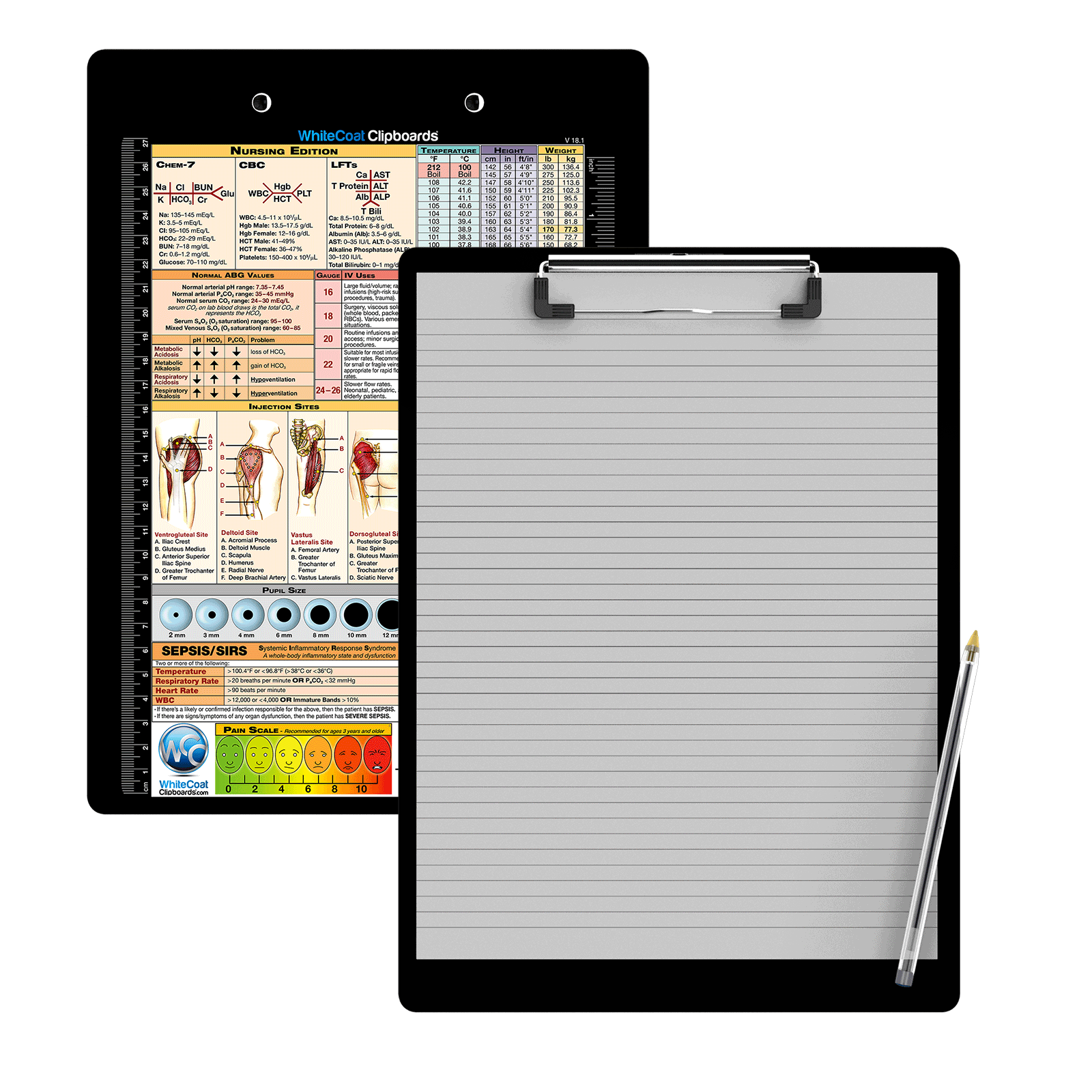
In the fast-paced world of healthcare, organization is key to providing efficient and effective patient care. Among the myriad of tools at a nurse’s disposal, one seemingly simple yet indispensable item stands out: the nursing clipboard. This unassuming accessory serves as a nurse’s right-hand companion, providing a portable surface for documentation, reference materials, and critical information. Let’s delve into the significance of the nursing clipboard and how it enhances the workflow and quality of care in healthcare settings.
The nursing clipboard is more than just a writing surface; it is a multifunctional device designed to streamline nursing workflows and improve patient outcomes. At its core, the clipboard serves as a repository for important documents such as patient charts, care plans, medication lists, and vital sign logs. Its compact size and sturdy construction make it easy for nurses to carry essential information as they move between patients, units, and departments.
One of the primary functions of the nursing clipboard is to facilitate documentation, a fundamental aspect of nursing practice. Nurses are responsible for recording a wealth of information, including patient assessments, interventions, and responses to treatment. With the clipboard readily accessible, nurses can quickly jot down notes, update charts, and complete required forms without having to search for a stationary writing surface. This saves valuable time and ensures that documentation is timely and accurate, which is crucial for continuity of care and communication among healthcare providers.
In addition to its role in documentation, the nursing clipboard serves as a repository for reference materials that aid nurses in their clinical decision-making process. Many clipboards feature built-in reference sheets with commonly used medical abbreviations, conversion charts, and assessment tools. These resources empower nurses to quickly access information at the point of care, reducing the need to consult bulky reference books or electronic devices. By having essential reference materials readily available, nurses can make informed decisions and provide evidence-based care without delay.
Furthermore, the nursing clipboard enhances communication and collaboration among members of the healthcare team. In busy hospital settings where multiple caregivers are involved in a patient’s care, effective communication is essential to prevent errors and ensure continuity of care. Nurses often use the clipboard to communicate important information such as patient status updates, care plans, and pending tasks with other nurses, physicians, and allied health professionals. By centralizing information on the clipboard, nurses can convey critical details efficiently, facilitating seamless transitions of care and promoting patient safety.
Beyond its practical utility, the nursing clipboard also plays a symbolic role in nursing culture. It serves as a visible reminder of the nurse’s commitment to organization, professionalism, and excellence in patient care. A well-worn clipboard adorned with stickers, notes, and personal touches often becomes a badge of honor for nurses, reflecting their dedication to their craft and their patients. In this sense, the nursing clipboard becomes more than just a tool; it becomes a symbol of pride and identity for nurses as they navigate the challenges of their profession.
Despite its many benefits, the nursing clipboard is not without its limitations. Traditional clipboards may lack features such as storage compartments, built-in calculators, or antimicrobial coatings, which can limit their functionality in certain settings. Moreover, paper-based documentation systems are increasingly being replaced by electronic health records (EHRs) in many healthcare facilities, raising questions about the continued relevance of physical clipboards in the digital age. However, even as technology advances, the nursing clipboard remains a staple in nursing practice, offering a tangible solution for organizing information in environments where speed, mobility, and reliability are paramount.
In conclusion, the nursing clipboard is a humble yet indispensable tool that plays a vital role in the delivery of patient-centered care. From facilitating documentation to serving as a repository for reference materials and fostering communication among healthcare providers, the clipboard enhances efficiency, accuracy, and collaboration in healthcare settings. As nurses continue to adapt to evolving technologies and practices, the nursing clipboard remains a timeless symbol of professionalism and dedication to excellence in nursing practice.